Flourish

A blog by Baptist Health

HealthTalks

Stephen Compton, MD

Orthopedic Surgery & Sports Medicine Services in Paducah, KY

View Hide Transcript
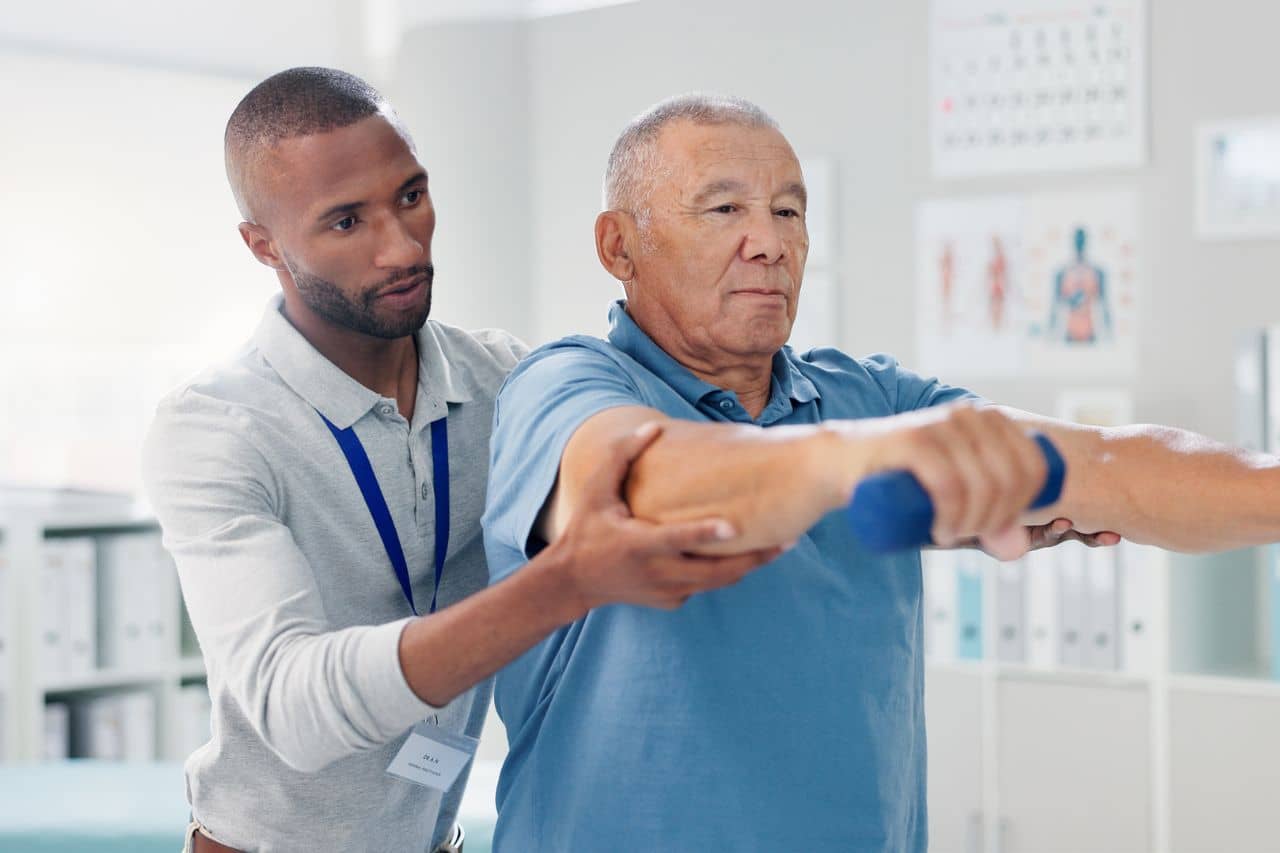
Here at Baptist Health Medical Group Orthopedics and Sports Medicine, we treat a variety of injuries. It can be from broken bones to overuse injuries, sprains, strains, wear and tear, arthritis, kind of a wide array of things on a daily basis. There's lots of injuries that we see that involve athletes that are actively competing at say the high school level and then there's the weekend warrior athlete like myself who still considers himself an athlete but they all still get hurt just the same. The goal is to get them back to that same standard they were at before they got injured.

Some of our more common procedures would be hip and knee replacement, shoulder and knee arthroscopy, carpal tunnel release, cubital tunnel release, and a Linder transposition, trigger finger surgery, basic fracture care, and management of broken bones.

As people age, a lot of times things will kind of wear out a little bit and some of those people are able to manage those things with modifying their activity, maybe taking a little bit of medicine, maybe slowing down a little bit, but some people don't want to slow down. They want to continue doing the stuff that they love to do and sometimes it does require surgery to get them back to that level of expectation and it ultimately comes down to quality of life.

People just aren't willing to give up on some things they want to do, and we want to help to get them back to those things so they can enjoy the rest of their lives.

So I'm from this area, it's really neat to be able to take care of people, sometimes even teachers you had in school, and be able to see the impact you can make on their lives, the ability to affect people's quality of life on a day to day basis and make that improvement to get them back to their activities or improve their quality of life so they can live a better life is truly amazing.
Biruk Almaz, MD

Fecal Incontinence Treatment & Sacral Neuromodulation in New Albany, IN

View Hide Transcript
Fecal incontinence can be an embarrassing and distressing condition. It is defined as uncontrolled passage of stool or gas. It affects nearly one in twelve adults in America alone, which is over twenty million population.

Fecal incontinence in some patients can be occasional. It can be daily. It can be unpredictable. Not only it affects the patients, also their family members, their social life, their career. It can also affect their mental health.

Incontinence is a complex mechanism which depends on interaction between bowel consistency, rectal compliance, pelvic floor coordination, neurological function, and sphincter function. Any disruption can result in fecal incontinence. The treatment is tailored to the patient's problems. After dietary modification and optimizing stool consistency, we proceed with pelvic physical therapy and biofeedback.

For patients who fail interventions, we offer them surgery. One of the most common is sacral neuromodulation. Sacral neuromodulation works by placing a small stimulator into the root of the sacral nerve which controls the bowel function as well as the urinary function. And by stimulating the nerve, it gives the patients a better sensation and a better compliance.

Patients have been greatly appreciative of the lifestyle change that this procedure has brought to them. They're able to have their life and their confidence back.
Dr. Amanda Herrell

Prediabetes Warning Signs You Shouldn't Ignore in Corbin, KY

View Hide Transcript
Pre diabetes is a metabolic condition. When you eat, your body breaks the carbs in your diet down into sugars. Your pancreas produces insulin, which is kind of the key that your body uses to get sugar out of your bloodstream and in your cells where it can be used for fuel. In prediabetes, you become resistant to insulin and thus blood sugar levels rise.

So those who are most at risk for developing prediabetes are those who are overweight or obese, people who are sedentary or eat a fairly unhealthy diet, those who smoke, and anyone with a family history of type two diabetes. Pre diabetes is different from diabetes in that it's often reversible. Once you progress to full blown diabetes, it's a chronic condition. It has to be managed often lifelong.

But if you are able to catch that in the pre diabetic stage, a lot of times you can make some dietary and lifestyle changes that can reverse that progression. The best practical advice I can offer regarding pre diabetes and protecting your long term health is to ensure some physical activity every day. I mean, even a short walk can make a big difference. And then in terms of diets, eat small portions of real foods.

So lean proteins, fresh or frozen vegetables, and then whole grain breads. A good adage to remember is everything in moderation, so you don't need to eliminate the sweets or the snacks. Just remember that those shouldn't be making up the bulk of your diet. It's not about being perfect.

It's just about being consistent, and then establishing that relationship with your primary care provider so you can get the screening that you need to make sure that you're maintaining your good health.
Brad Housman. MD

Recognizing Sepsis Warning Signs in Paducah, KY

View Hide Transcript
Sepsis is the body's reaction to infections. Specifically, it's kind of an exaggerated response to infections that we see typically in different sorts of patients. Sepsis does evolve very quickly and there are some steps that if they're taken early can help lessen the body's response to an infection.

As a physician I was very familiar with sepsis but I think physicians are often poor patients. I took some Tylenol, laid in a bath. I started hallucinating, getting confused. I also felt very weak.

My husband had to help me to the restroom, and at that point, he decided it was time to go to the As a reminder, we use the acronym for time when we're discussing sepsis.

The T in time stands for temperature, so a particularly elevated temperature or a lower than expected temperature can be signs of early sepsis. The I stands for infection. That can be any infection, respiratory infection, urinary tract infection, skin infections, etc. And then M is mental change, particularly in the elderly. So, an elderly patient with confusion, we're very concerned about the possibility of sepsis. And then the last one is for extreme illness. Feeling worse than you might expect because of a recent cold or infection, having shortness of breath, having a rapid rate, those are all things that should prompt you to see emergent medical attention.
Austin Ward, MD and Griffin Bicking, DO

Aortic Aneurysm Repair in Paducah, KY

View Hide Transcript
Doctor. Thomas came to us with a really complex problem. He had had heart surgery over fifteen years prior. And where they did his heart surgery, the wall of the aorta or the main blood vessel that comes out of the heart had weakened. And as that aneurysm was getting bigger, the wall was getting weaker and it was really at risk of rupturing.

I talked to Austin Ward and he had an idea that he could do a new procedure.

He was pretty confident that it would work. And I said, Well, how confident are you on a one to ten scale? And he said, I'm confident ten. And I said, Schedule it.

Where this problem was in Doctor. Thomas' aorta is really at a crossroads of where I typically work, which is the ascending aorta, and where Doctor. Bicking typically works, which is the descending aorta. Doctor. Thomas' pseudoaneurysm was really in his aortic arch, is the meeting of those two spots. It's a very demanding procedure.

It takes a lot of expertise, lot of training, a lot of time and planning to do this.

We met with the team multiple times. Doctor.

Ward had written up a whole thing for where we need to be, where things were going be in the room.

This problem is extremely rare and this treatment endovascularly has only been performed a few times. So this highlights our ability to adapt and come up with innovative solutions for complex problems like that here at Baptist Health Paducah.
Irfan Afaq, MD

Behavioral Health Crisis Treatment in La Grange, KY

View Hide Transcript
Anyone can have mental health issue, but a crisis will be someone who is either in imminent danger to self or others, they're having an acute exacerbation of psychosis. That could be anyone who has a previous history of mental illness, or someone who is having a new onset of symptoms or going through any difficult time in their personal life or someone who needs to be in the hospital immediately. So when the patient is admitted on the unit, we try to give them a break from the outside world, which means they are not going to be able to have access to things that distract them, and they're kept under constant supervision.

They sleep on time, they eat on time, their medications are maintained and managed by the nursing staff. They see the psychiatrist within twenty four hours of admission to the hospital so that we can do a psychiatric assessment. Based on that, we can formulate a treatment plan. And that treatment plan would include not only the medication management, but also for them to be able to receive some therapy, both the individual and therapy groups.

And then we are able to involve their families into treatment decisions as well. The goal of all of that is, you know, we can stabilize them on their mental health as soon as possible so they could be stepped down to the lower level of care. So when a patient is going through an acute mental health crisis, to be able to get the mental health back on track means not only helping these patients, but their families and the community in general. And that is what we find to be most rewarding.
Amanda Soudom APRN

Recognizing Perimenopause Symptoms in Elizabethtown, KY

View Hide Transcript
Perimenopause is the natural transition leading up to menopause. It's the body's way of gradually moving toward the end of the reproductive years. During this time, hormone levels, especially estrogen and progesterone, start fluctuating. And those changes can affect almost every part of your body.

It can last anywhere from a few years to close to a decade before menopause actually occurs. One of the biggest misconceptions is that hot flashes are the only symptom. In reality, many women experience anxiety, depression, brain fog, joint aches, fatigue, weight changes, skin changes before they ever even have hot flashes. Another myth is that you just have to deal with it.

You don't. There are many treatment options that can help and you deserve to know what those are. When I help patients choose a treatment, there is no one size fits all approach. We look at your symptoms, your medical history, your family history, your lab work, your lifestyle, and most importantly, what your goals are.

Together, we come up with a plan that's right for you. Understanding what's happening to your body helps you recognize the symptoms and know what to expect and feel empowered to ask for help. There are effective treatments available and with the right support, you can continue to feel healthy, active and like yourself again.
Jason R Hall MD

Lumbar Fusion Surgery in Elizabethtown, KY

View Hide Transcript
Lumbar fusion surgery is an operation where we join two or more bones at the back together. We're doing that typically with placement of screws and rods. And then as part of the surgery, we're typically removing a degenerated or herniated disc. And then we replace that with either a spacer or a cage, with the goals being to decompress the nerves, stabilize the spine, realign the spine.

Before surgery, patients obviously will see us in the office where they'll get a thorough history and physical, and we'll decide if they're even a candidate for surgery. The surgery is rarely the first option chosen, so almost everybody is going to get some sort of conservative treatment and the majority of patients can do well with this. But ultimately if their pain and quality of life are diminished and their match their imaging, then they can be a candidate for surgery and we discuss that in more detail. Today's fusion techniques have certainly come a long way compared to fifteen or twenty years ago with a lot of the focus being on more minimally invasive techniques using smaller incisions, less tissue which ultimately leads to typically less blood loss, lower rates of infection, and faster return to activities for our patients.

The most important thing about lumbar fusion surgery is choosing the right operation for the right patient. For those that are good candidates, we see typically very excellent results. Obviously, of these things take time for them to see the maximum benefit, but most patients can return back to the activities they were enjoying before surgery, and many of them could not do things before surgery because of their pain that now they're able to do.

“The caregiving I’ve received at Baptist Health Paducah is beyond any I’ve ever received in my life.”

Bob Dwyer is facing a rare form of cancer from the sanctuary of his home.

Digital Wellness

Get the Baptist Health MyHealth App

The app provides easy to access:

  • Wellness resources
  • Provider search
  • Urgent care wait times & check-ins
  • Location search
  • MyChart
Download the app:
Mature grey haired woman smiling with look of enjoyment and confidence on her face.