What Stomach Diseases Require an X-Ray?
What Stomach Diseases Require an X-Ray?
If you’ve ever had concerns about persistent or intense belly pain, you want to know what might be causing it. Your primary care physician or a specialist called a gastroenterologist might suggest an abdominal X-ray to see what’s going on.
Medical imaging is often the first step when someone comes in with sudden pain or nausea. An X-ray is a simple tool that helps your medical team figure out if the issue is in your stomach or somewhere else in your abdomen.
What Is an Abdominal X-Ray?
An X-ray is a noninvasive way to look inside your body. It uses small beams of energy to create a picture of your internal tissues and bones. Because different parts of your body absorb these beams in different ways, they show up clearly on the final image.
Dense things like bone or an ingested object appear white, while soft tissues like your stomach and other organs show up in shades of gray. This procedure is painless and safe for most people. No radiation stays in your body once the test is finished.
Most of the time, the entire visit takes about 15 minutes. It’s an easy way for your physician to get the information they need without a more invasive procedure.
Stomach Issues That May Need an X-Ray
Your stomach is an organ that can be affected by a variety of medical conditions. There are several issues a physician can identify with an X-ray of this area, including:
- Holes or openings in the stomach wall can be detected.
- Growths such as tumors or other masses might be visible.
- A hiatal hernia (when part of the stomach pushes up into the chest) can be detected.
- Ulcers in the stomach can be seen.
- Inflammation or other changes in the stomach lining may be visible.
Using imaging helps catch these issues early, so treatment can begin. Sometimes a physician might ask you to drink a liquid called barium. This material coats your stomach and helps it show up more clearly on the X-ray. This specific test is often called an upper GI series.
X-Ray Imaging for Other Conditions Affecting the Digestive Tract
The stomach isn’t the only organ in your belly that your physician might need images of. An abdominal X-ray can also help diagnose problems throughout your entire digestive tract. For example:
- Intestinal blockages are a common reason for this type of imaging.
- Foreign objects that someone accidentally swallowed can be located quickly.
- Gallstones or kidney stones often show up in these films.
- Diverticula, which are small pouches that can form in the walls of your intestines, can be detected.
- Swollen veins known as varices can sometimes be identified.
- The cause of persistent heartburn may be visible.
When a physician needs to check the kidneys and bladder, too, they call it a KUB X-ray (for kidneys, ureters, bladder). Sometimes they take several pictures in different positions to look for blockages. This set of images is called an obstruction series.
Getting Ready for Your Visit
Preparing for an X-ray is usually very simple. You generally don’t need to fast or do anything special before you arrive. However, you should tell your physician if you have taken medicines containing bismuth (to treat an upset stomach or diarrhea, for example) in the last few days, as it can affect the procedure.
You also need to mention if you recently had a test that used barium contrast. It’s very important to tell your physician or technologist if there’s any chance you’re pregnant. X-rays are usually avoided during pregnancy to protect the baby from radiation.
When you get to the facility where you’ll have your X-ray, you’ll need to remove jewelry and metal objects. These items can show up in the image and block the view of your organs.
What To Expect During and After an Abdominal X-Ray
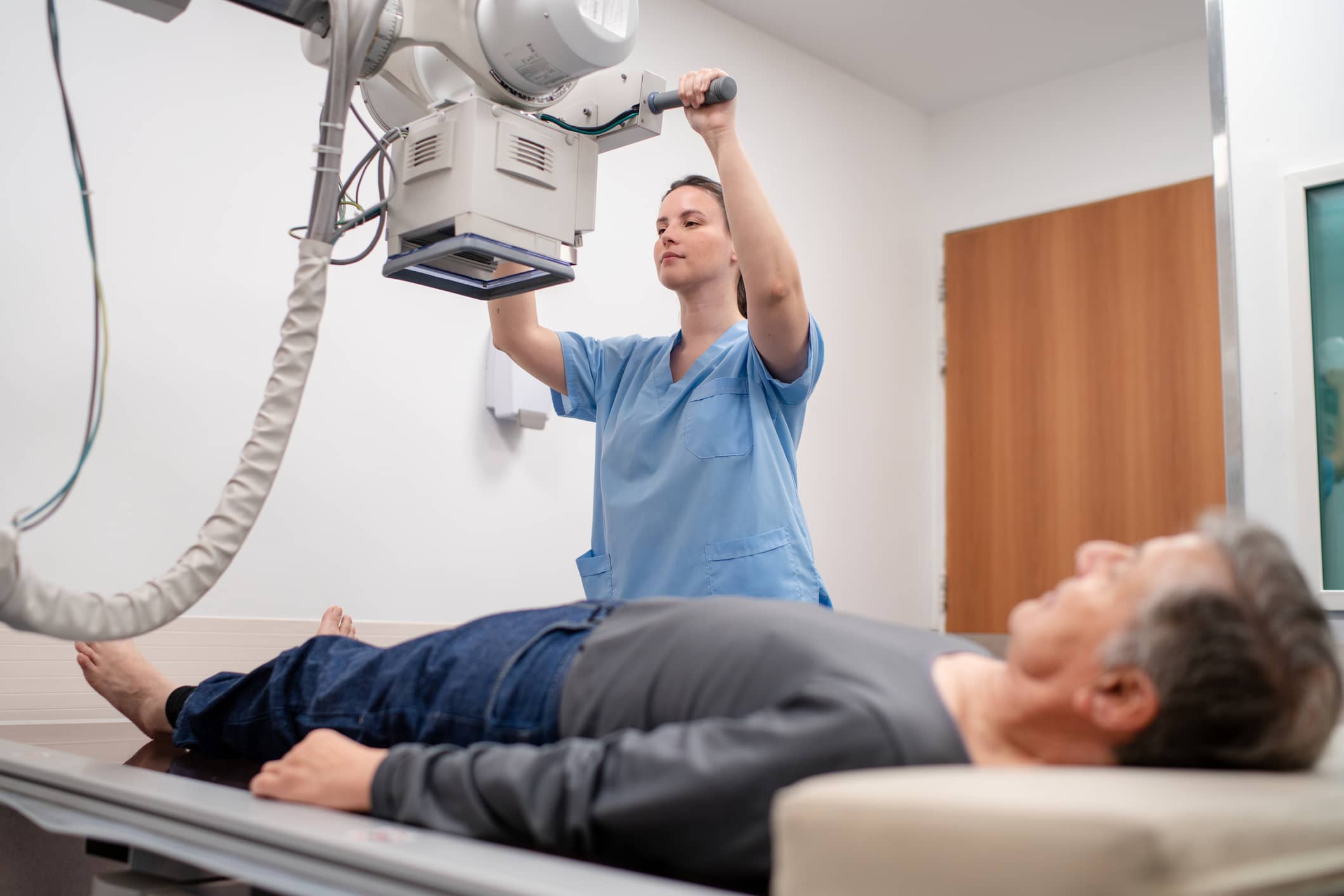
During the test, a technologist will help you get into the right positions for getting the correct images. You might lie flat on a table, lie on your side or stand up.
You have to stay very still while the images are captured. You might even be asked to hold your breath for a second or two. This prevents the image from being blurry. The actual exposure to radiation lasts less than a second.
Once the images are ready, a physician called a radiologist will study them. They’ll send a report to your primary care physician or specialist, who will then talk to you about the results. You can go right back to your normal day as soon as the test is over.
Get Help With Stomach Issues From Baptist Health
If you have questions or concerns about symptoms affecting your stomach, talk with your Baptist Health physician. If you don’t have one, you can find care near you in our provider directory.
.jpg?rev=fa212a77b06c427682309ed2c9c336c6)
.jpg?rev=35451d54b75348a29f2af48e9cf53d6a)