Flourish

A blog by Baptist Health

HealthTalks

Meg Brown

Mental Health Intensive Outpatient Program (IOP) in Richmond, KY

View Hide Transcript
Mental Health IOP is an intensive outpatient program. It started at the beginning of December here at Baptist Richmond. It is a program that is a group model. It is for individuals that struggle with their mental health and they are able to come to a group setting here at the hospital.

We use multiple therapeutic modalities in this program that are designed for group therapy and are very beneficial for the patients. Some of those are dialectical behavior therapy, trauma informed therapy, and cognitive behavioral therapy. Each of those therapies are designed for group settings and they have been shown to be very beneficial when it comes to mental health treatment. It is beneficial to patients because they are able to be around other individuals who are also struggling with their mental health.

It is a very safe environment and confidential, which oftentimes makes people feel very comfortable. They are also able to talk about their mental health disorders and maybe things that they have experienced in the community with their families. There is some stigma that is related to mental health and when they are in these groups they are able to relate to one another and to really share their stories in an environment that is very safe.

Our hope for outcomes with this program is that individuals will not have to go back into psychiatric hospitalization and are able to live with their families, friends, with their supports, and they will be able to live a healthy, happy life with the skills that they have learned from the program.
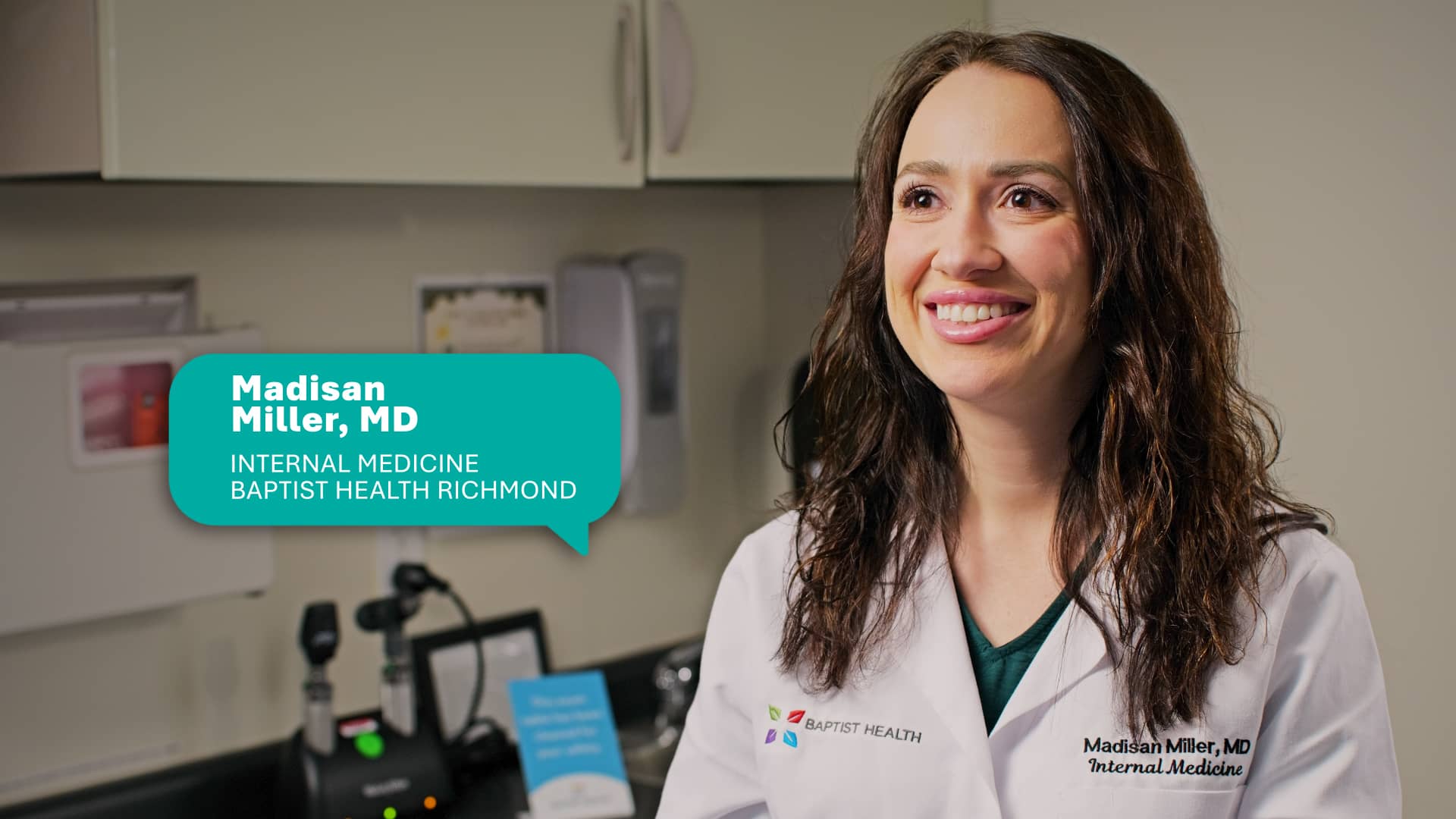
Madisan Miller, MD

Healthy Lifestyle & Preventive Care in Richmond, KY

View Hide Transcript
As a primary care physician, part of my role is to encourage a healthy lifestyle because we want to add quality to people's years of life in addition to the quantity.

Sometimes that can include helping people with their medications or just kind of walking alongside of them when they're making lifestyle changes, whether it's losing weight or working on their mental health. When we set goals, we want to be SMART. And SMART stands for setting a goal that's specific, and then we want to be attainable and realistic. So setting goals in increments instead of massive goals that are out of reach. And the last thing is that the goal is timely. Having a time frame so that we have a marker that we can go back and say I've reached my goal and you can feel good about that.

There's a lot of things you could consider when planning meals to make them healthier. Just a few things are including a lot of protein. Fiber is also important, keeping your digestive system regulated. And then planning ahead of time can be really helpful.

Exercise is also important for living a healthy lifestyle. Exercise needs for people are generally thirty minutes of moderate activity at least five days a week.

So one thing we want to emphasize is living a healthy lifestyle includes a lot of prevention and not just treatment of diseases. So we want to try to stop these things before they happen if we can.

My ultimate goal in patient care is establishing long term relationships with my patients. I want to meet them where they're at with their health, but I also want to walk along them.

The more we get to know people, the better we can take care of them holistically.
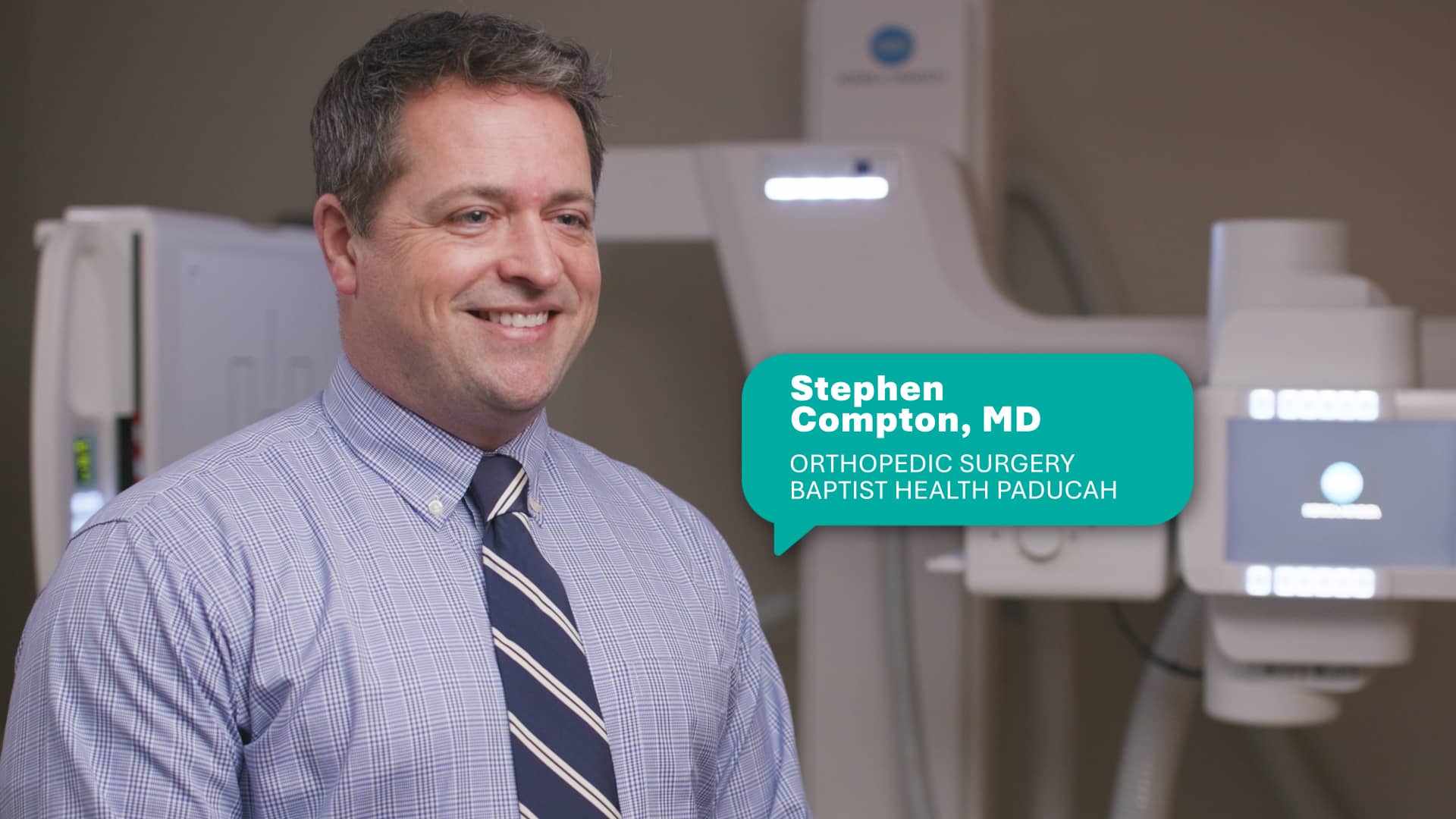
Stephen Compton, MD

Orthopedic Surgery & Sports Medicine Services in Paducah, KY

View Hide Transcript
Here at Baptist Health Medical Group Orthopedics and Sports Medicine, we treat a variety of injuries. It can be from broken bones to overuse injuries, sprains, strains, wear and tear, arthritis, kind of a wide array of things on a daily basis. There's lots of injuries that we see that involve athletes that are actively competing at say the high school level and then there's the weekend warrior athlete like myself who still considers himself an athlete but they all still get hurt just the same. The goal is to get them back to that same standard they were at before they got injured.

Some of our more common procedures would be hip and knee replacement, shoulder and knee arthroscopy, carpal tunnel release, cubital tunnel release, and a Linder transposition, trigger finger surgery, basic fracture care, and management of broken bones.

As people age, a lot of times things will kind of wear out a little bit and some of those people are able to manage those things with modifying their activity, maybe taking a little bit of medicine, maybe slowing down a little bit, but some people don't want to slow down. They want to continue doing the stuff that they love to do and sometimes it does require surgery to get them back to that level of expectation and it ultimately comes down to quality of life.

People just aren't willing to give up on some things they want to do, and we want to help to get them back to those things so they can enjoy the rest of their lives.

So I'm from this area, it's really neat to be able to take care of people, sometimes even teachers you had in school, and be able to see the impact you can make on their lives, the ability to affect people's quality of life on a day to day basis and make that improvement to get them back to their activities or improve their quality of life so they can live a better life is truly amazing.

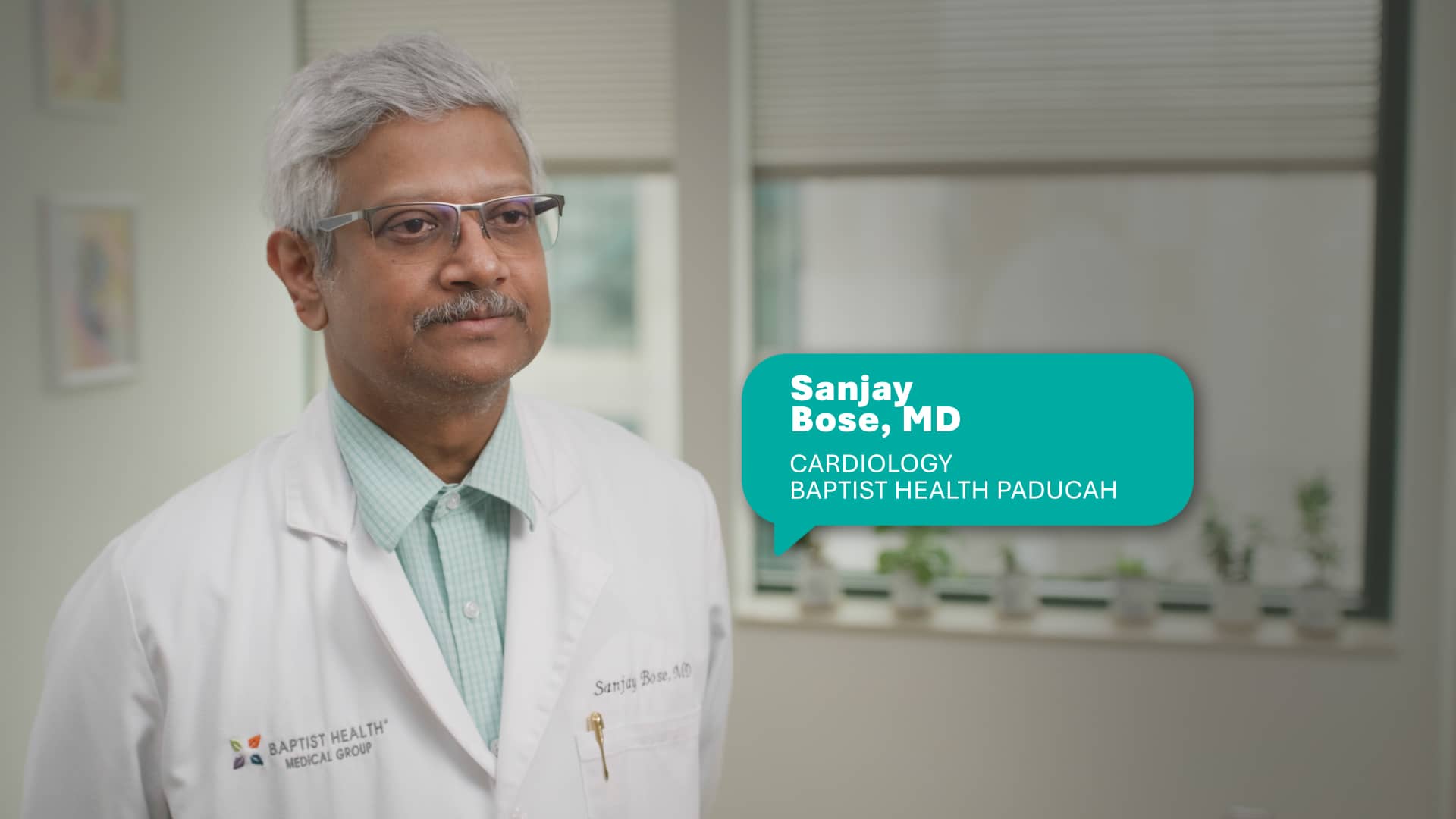
Sanjay Bose, MD

Cardiac MRI & Advanced Heart Imaging in Paducah, KY

View Hide Transcript
The cardiac MRI is the most accurate way of measuring the pumping function of the heart, both for the left and the right side of the heart, so it's the gold standard.

I had done some initial testing, but then Doctor Bose wanted to have a clearer picture of my heart to see what was really going on.

One of the biggest advantages of MRI is that it does not use any radiation. We can get very accurate imaging, look at the bowels. We are able to look for masses, tumors, blood clots, any complications from a heart attack.

The test is thorough and the information that it provides can be life changing. If your doctor recommends a cardiac MRI, it's because they want the best possible picture of your heart and the best outcome for you. I was incredibly thankful. Being able to receive such advanced care close to home made a huge difference. I didn't have to worry about driving out of state. Everything that I needed was right here in Paducah.

There are no MRI centers in this part of the state. The bigger centers are more than one hundred miles away. It's a tremendous benefit to them because we can provide very accurate diagnosis of the conditions we are testing with cardiac MRI and then our volumes have grown exponentially and continues to grow. So we want to expand this program further which would be quite unique for this region.
Steven Heatherly, MD

Heart Failure Management & Clinic Care in Louisville, KY

View Hide Transcript
In our heart failure clinics, we focus on the outpatient management. So our big goal is to keep patients at home. So we're trying to keep them out of the emergency room and out of the hospital. So that involves a lot of medication adjustments.

We use a lot of medicines for heart failure. One of the biggest threat that our patients have is this invisible thread of fluid slowly accumulating and it can accumulate before the patient even knows it. For people that have pump problems, we use four families of medicines for those patients. And then they have to be dosed based on your blood pressure, your heart rate, and how you're feeling, and also how much fluid you have.

And so we do a lot of frequent visits where we look at those vital signs, talk to the patient, see how they're feeling, and then make the adjustments. In our heart failure clinics, we have this new device called the REDS system. It's basically a part of the vital signs now, so when the patient comes in, they get seated in a chair. A small sensor goes over their shoulder, takes about forty five seconds.

It uses radio waves, which are harmless, and it gives us a lung score and lets us know about how much fluid is in their lungs that day. Then we make adjustments based on that during that visit. When the patient has a REDS score and let's say it's too high indicating they have too much fluid, then we can make medicine adjustments that day that gets that fluid out of there over the coming days so that they don't have to go to the emergency room. In our heart failure using a device like the REDS System and frequent appointments and medication adjustments, we can help patients live a much better quality of life.
Ivan Pena, MD

Chronic Total Occlusion (CTO) Treatment in Louisville, KY

View Hide Transcript
Coronary CTO stands for a chronic total occlusion, which is a one hundred percent blockage in a coronary artery. These arteries are the ones that feed blood back to the heart. So it's a blocked artery that's been there for at least three months. Patients that actually feel their CTO are gonna feel either shortness of breath with activity, they might have chest pressure with activity, whether that's walking around, going upstairs, walking their dog, or activities in their house.

But the other thing they can feel is decreased exercise tolerance. So they may have been able to do certain activity in the past, but now they have to stop because they're short of breath, tired, or have chest pressure. So the way that a CTO is diagnosed is with a coronary angiogram or a heart cath. And typically what we're looking for is a one hundred percent blockage in an artery.

And almost one hundred percent of the time, we're able to see branches that the body has built around the heart to feed that area since it can't get through the one hundred percent blockage. The first line treatment is always medications. We typically put them on a beta blocker to slow their heart rate down, but in patients who still have symptoms, in those patients we offer what's called a PCI or a Percutaneous Coronary Intervention, which is kind of a complicated way to say that we try to stent it. Here at Baptist, we've had an over ninety five percent success rate in fixing CTOs.

Once someone has a successful PCI of their CTO, they see a dramatic difference in their symptoms. They are no longer short of breath when they walk. They no longer have chest pressure or pain when they do any activities. And they're able to exercise more.

So their quality of life, for sure, improves.
Hannah Watercutter, MA

Cardiac Rehab & Heart Recovery in Lexington, KY

View Hide Transcript
Cardiac Rehab is an exercise program designed for patients with heart disease, heart failure, different types of heart events that qualifies them for this program. It's an exercise program that incorporates diet, exercise, smoking cessation, medication adherence, encompasses all those things. That way we can teach patients how to live a heart healthy lifestyle after a heart event. In order get into cardiac rehab, you have to have what's called a qualifying diagnosis.

Bypass surgery, valve replacement repair, chronic systolic heart failure with an ejection fraction less than thirty five percent, a heart attack, a stent, angioplasty, those are some of the types of diagnosis that would qualify for cardiac rehab.

Cardiac rehab is extremely important. I've been in this program for almost twelve years and I can count numerous times where we have intervened to save a patient's life. Whether that's finding a medication that they should have been taking and they haven't been, giving them the appropriate education that they needed, teaching them and breaking down the barriers that they have with exercise.

We're able to really change a patient's life from day one to session thirty six and they're a completely different person. Not only have they had the education that they need to move forward to improve their quality of life, but they built the confidence to do it on their own.
Jennifer Rea, MD

Colon Cancer Screening & Prevention in Lexington, KY

View Hide Transcript
Colorectal cancer is one of the most preventable cancers that we have, yet it remains the second leading cause of cancer deaths among men and women in the U. S.

Screening is indicated at age forty five for patients with with average risk, which means they don't have symptoms or a family history indicating them for earlier screening or a known genetic disorder. Screening guidelines for patients that have a first degree relative with colorectal cancer, they're due for screening ten years to the age of diagnosis that family member. So if my father got diagnosed with colon cancer at fifty two, then I would be indicated at forty two. However, some of those guidelines change based on specific family history, so it's really important to talk to your provider about when you're up to be indicated for your screening exam.

Colonoscopy remains the gold standard for prevention and detection of colorectal cancer. A colonoscopy is the only screening test that we have for colorectal cancer that is able to remove polyps when they are in a precancerous form before they turn into cancer. We want to be finding polyps and removing them before they turn into cancer. Early stage colon cancer has excellent prognosis.

When we find colorectal cancers early stage in patients, more than ninety percent of those patients, when treated appropriately, will be alive and with us five years later.

“The caregiving I’ve received at Baptist Health Paducah is beyond any I’ve ever received in my life.”

Bob Dwyer is facing a rare form of cancer from the sanctuary of his home.

HealthTalks Now Podcast

Baptist Health is bringing you the facts you need to keep you and your family well. Whether you want to learn more about a specific condition or procedure or find tips for living a healthy lifestyle, we'll be here to help you become a healthier you. 

Latest Episode:

Digital Wellness

Get the Baptist Health MyHealth App

The app provides easy to access:

  • Wellness resources
  • Provider search
  • Urgent care wait times & check-ins
  • Location search
  • MyChart
Download the app:
Mature grey haired woman smiling with look of enjoyment and confidence on her face.